Is now the right time to hold, refinance, or sell your Brooklyn mixed-use or brownstone property? If you own a building like 632 President Street in Park Slope, you are weighing cash flow, loan terms, cap rates, and taxes that have all shifted since 2021. You want a clear, numbers-first way to compare paths without guesswork. In this guide, you’ll get a simple framework, current market context, and an example you can adapt to your rent roll. Let’s dive in.
What changed in 2026 financing
Mortgage costs improved, but they are not back to 2021 lows. The Federal Reserve held the policy rate at 3.50%–3.75% at its Jan 28, 2026 meeting, which influences bank loan pricing and short-term funding costs but does not move in lockstep with mortgages. You can see the policy rate context in the Fed’s official release. Review the FOMC statement.
On the consumer side, the average 30‑year fixed mortgage rate was 5.98% for the week ending Feb 26, 2026. Rate quotes change weekly and by borrower profile, but this level improves refinance math for some owners compared to 2023–2024. Check Freddie Mac’s PMMS reference before you price any refi scenario.
For small-balance multifamily or mixed‑use loans underwritten on income, lenders commonly target a minimum Debt Service Coverage Ratio around 1.20–1.25 with LTV bands that vary by sponsor and asset. That means NOI coverage is back in focus, even if headline rates improved. See indicative small-balance DSCR norms.
Brooklyn values and cap rates now
Investor yield expectations reset after 2021. Borough reports show wider cap rates in 2024–2025, with Ariel’s 2025 Brooklyn average near 6.96%. Wider cap rates typically reduce sale prices for a given NOI and increase buyer underwriting scrutiny. Read the 2025 Brooklyn snapshot.
What that means for you: valuation is very sensitive to your actual NOI and the cap rate buyers will accept today in Park Slope and nearby blocks. Even a 50–100 basis point shift can change value by many percentage points, so run your numbers using a conservative range.
632 President Street example
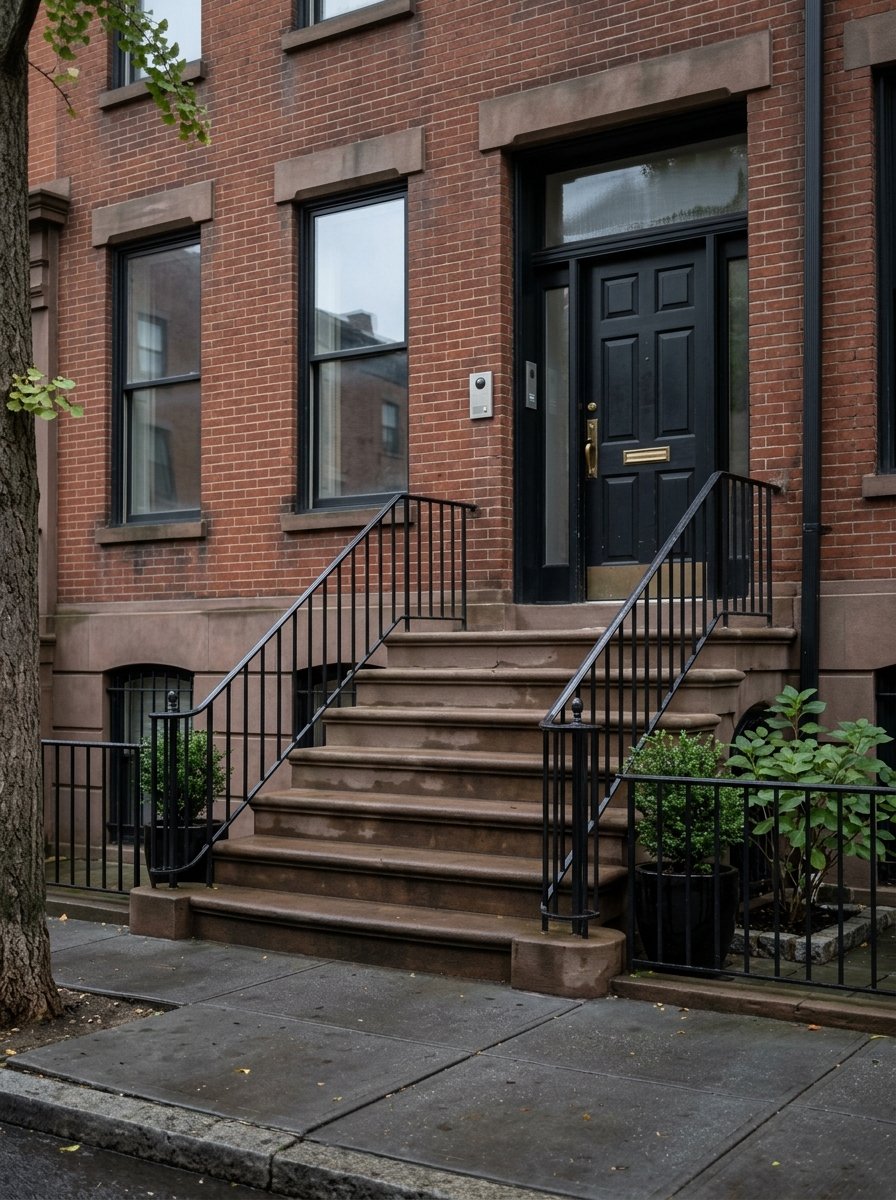
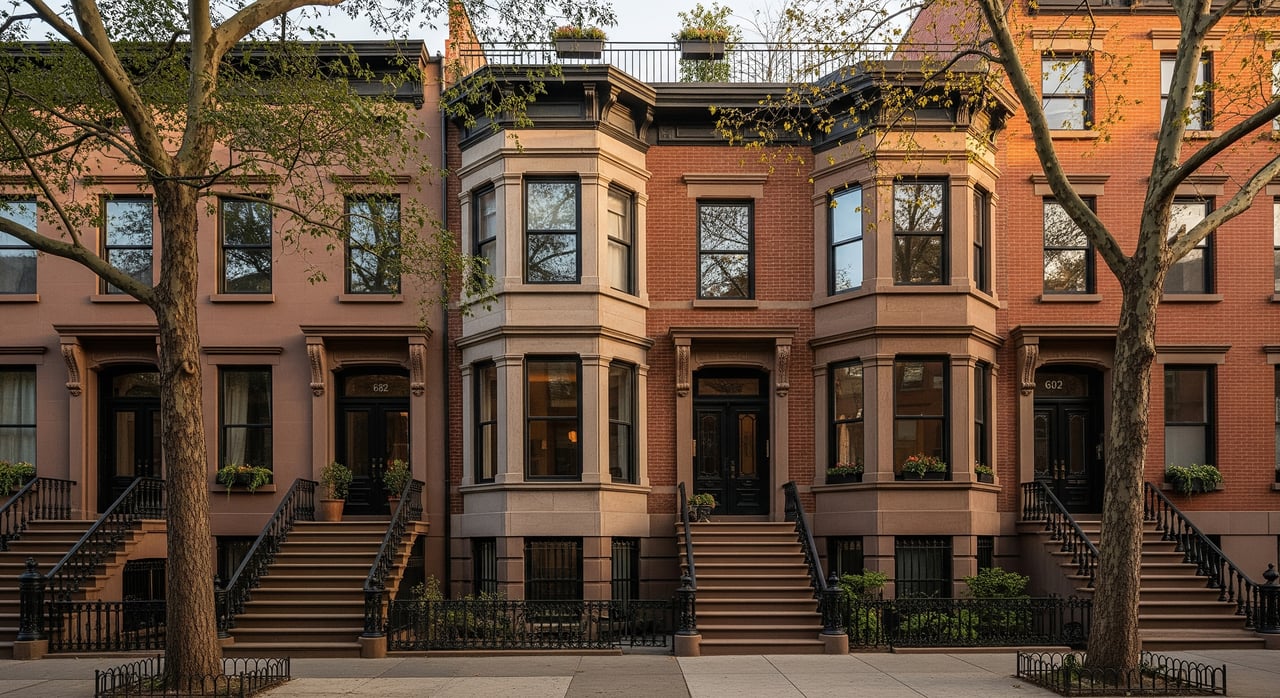
Public records for 632 President Street indicate a pre‑war brownstone of roughly 3,000 square feet, built circa 1920, in an R6B context with four units. Treat this as a representative Park Slope case. Your actual decision should use your current rent roll, expense schedule, leases, and any open violations.
Quick valuation math you can use
Core formulas you need:
- Gross Potential Rent (GPR) = sum of annual rents at full occupancy
- Effective Gross Income (EGI) = GPR − vacancy allowance − concessions
- Net Operating Income (NOI) = EGI − operating expenses (exclude debt)
- Capitalization price = NOI ÷ cap rate
- Cap rate = NOI ÷ current market value
- Debt Service Coverage Ratio (DSCR) = NOI ÷ annual debt service
- Cash‑on‑Cash Return = annual pre‑tax cash flow ÷ owner equity
- Refi break‑even months = total refi costs ÷ annual cash‑flow improvement × 12
Example only, for illustration: if your pro‑forma NOI is $100,000 and buyers expect a 6.5% cap, an implied value is $100,000 ÷ 0.065 = $1,538,462. If market sentiment shifts to a 6.0% cap, value rises to $1,666,667. If sentiment widens to 7.0%, value moves to $1,428,571. A modest NOI change or cap rate move can swing price more than you might expect.
Public portal estimates have at times shown values around $3.05 million for this address, which highlights why you want your actual NOI and a current cap‑rate read before you decide. Treat online values as a rough cross‑check, not a pricing target.
Refinance math at a glance
You refinance to lower debt service, extend maturity, or pull cash for cap‑ex or family planning. To compare your current note to a new one, tally these items:
- Current loan snapshot: balance, rate, amortization, annual debt service, maturity, and any prepayment penalty.
- New loan quote(s): target rate and term, closing costs (points, legal, appraisal, title, lender fees), projected annual debt service, covenants, and recourse.
- Break‑even months: divide total closing costs by annual debt‑service savings, then multiply by 12. If you will sell soon after, a refi that breaks even in 42 months may not be logical.
Lenders in today’s environment will look for DSCR near or above 1.20–1.25, stronger coverage for the best pricing. See common SBL DSCR levels. If your DSCR is tight at today’s NOI, consider a cash‑neutral rate‑and‑term refinance or hold until NOI supports a better structure.
Compliance that hits cash flow
Regulatory items can change your cash needs and buyer appetite. Check these first:
- Rent stabilization: In NYC, rent stabilization generally covers buildings with six or more units built between Feb 1, 1947 and Dec 31, 1973, plus some properties with tax benefits. A four‑unit brownstone is often free‑market, but you should verify registrations and status with DHCR. Regulated units limit rent growth and often widen cap rates. Review rent regulation basics.
- Parapet inspections: Annual parapet observations are required for parapets that face the public right‑of‑way. Unsafe findings trigger immediate protection and repairs, which can affect timing and cash. See the DOB parapet FAQ.
- Local Law 97: This emissions law applies to buildings over 25,000 square feet and some aggregations. Most single brownstones fall below the threshold, but confirm your status. Check LL97 guidance.
Three paths: hold, refinance, or sell
Hold for the long term
Consider holding if NOI is stable or growing, cash‑on‑cash meets your family’s target, and near‑term cap‑ex is modest relative to equity. Holding also fits if a refinance would increase covenants without adding cash‑flow benefit, or if your estate plan favors a future step‑up in basis for heirs.
What to check now:
- Cash‑on‑cash at today’s NOI and expenses, including a vacancy allowance.
- Three to five‑year cap‑ex plan: parapet, roof, systems, kitchens, windows. Verify next parapet deadlines.
- Succession plan and entity structure with counsel.
Questions for your advisors:
- What does a conservative NOI forecast look like if vacancy or rents soften?
- Are there open DOB, HPD, or OATH items that need cash or could delay a closing later?
- What estate planning approach preserves flexibility while managing taxes?
Refinance to optimize cash flow
Refinance when your new quoted rate and structure reduce annual debt service after fees, or when you need capital for improvements and DSCR comfortably clears lender minimums. In today’s market, fixed terms of 5–10 years with 25–30‑year amortization are common in small‑balance programs, with better pricing at higher DSCR and lower LTV. Review typical SBL parameters.
Your pre‑refi checklist:
- Rent roll, trailing‑12 income and expense, leases, and receipts.
- Pro‑forma with DSCR and LTV sensitivity at varied NOI and rates.
- Two to three soft quotes: a local bank, an agency SBL lender, and a regional life‑company or CMBS broker.
- Break‑even months for closing costs vs monthly savings.
Questions for your advisors:
- What DSCR and LTV are achievable, and what prepayment or recourse applies?
- If you pull cash out, how does a higher balance affect a future sale at current cap rates?
Sell to capture liquidity
Selling may be sensible if buyer demand and pricing exceed your tax‑adjusted value, if you need liquidity or want to exit active management, or if near‑term cap‑ex will erode returns. Model net proceeds carefully. NYC’s Real Property Transfer Tax adds to closing costs and varies by classification and price, and New York State has a separate transfer tax. Review NYC RPTT rates.
Your sell vs hold checklist:
- Net proceeds after commission, NYC and NYS transfer taxes, attorney, title, and expected capital gains tax (or 1031 planning timeline).
- Appraisal and underwriting risk consistent with 2024–2025 cap‑rate levels.
- Likely buyer pools: local owner‑operators, 1031 buyers, or regional investors, and whether to market discreetly or broadly.
Questions for your advisors:
- Which buyer profile pays best for your building type and block context?
- What is the likely time to contract and close given current underwriting norms?
A simple decision flowchart
Use these yes or no thresholds to narrow your path:
- DSCR test: At a conservative rate and amortization, does projected NOI cover annual debt service at ≥1.25x with headroom?
- Yes: consider refinance or hold.
- No: consider hold with cap‑ex plan, or sell before maturity risk.
- Compliance and cap‑ex: Are next 3–5 years of required work manageable within planned cash flow?
- Yes: hold or refinance may fit.
- No: weigh a sale or a cash‑out refi earmarked for improvements.
- Net proceeds: Do modeled sale proceeds after taxes meet your family’s financial goals?
- Yes: explore a sale now.
- No: hold or refinance and reassess in 12 months.
- Time horizon: Will you own for 5+ years, or is a transition likely sooner?
- 5+ years: a refinance that breaks even within 24–36 months can make sense.
- Shorter: avoid refis that break even far beyond your likely exit.
Document checklist to prepare
Assemble these before you speak with lenders, brokers, or your CPA:
- Current rent roll, copies of leases, and a 12‑month income and expense statement
- Utility bills and tax bills, insurance declarations, and proof of reserves
- List of capital improvements and a 3–5‑year cap‑ex plan with estimates
- Any DOB/HPD/OATH violations or open permits, plus parapet inspection records
- Mortgage note, latest statement, prepayment terms, and maturity date
- Entity documents and ownership structure summary
Succession and tax planning notes
If you intend to pass the property to heirs, current federal law provides a step‑up in basis at death, which can reduce or eliminate built‑in gains if a sale occurs soon after inheritance. Rules can change, so align your real estate plan with current estate and gift tax thresholds through your CPA and attorney. For context on why appraisals matter in inheritance scenarios, you can review this overview on basis and valuation. Learn why appraisals matter for inherited property.
Putting it together for a Park Slope brownstone
- Start with your numbers: calculate GPR, EGI, NOI, and current DSCR. Stress test NOI at minus 10% and cap rates from 6.0% to 7.0%.
- Check compliance: parapet status, any façade or system issues, and whether rent regulation applies to any unit. Use the DOB parapet FAQ and DHCR rent resources.
- Price both paths: get two or three refinance quotes and a sale opinion of value anchored to current cap‑rate comps. Track the borough’s cap‑rate context.
- Model taxes and timing: include NYC and NYS transfer taxes for a sale, or prepayment penalties for a refi. Review RPTT basics. Then decide based on cash‑flow goals and family planning.
When you want a discreet, cycle‑aware read on buyer demand and an execution plan tailored to your building, speak with a broker who lives in this data every week. If you are considering a sale or exploring both sale and refi side by side, the team at Exodus Capital can pressure test pricing, outline likely buyer pools, and help you plan a clean, efficient process.
FAQs
What should a Brooklyn mixed‑use owner watch in 2026?
- Focus on DSCR thresholds, current cap‑rate ranges near the high‑6s for borough deals, and NYC compliance costs like annual parapet inspections that affect cash flow.
How do I value a four‑unit brownstone like 632 President Street?
- Calculate NOI from your rent roll and expenses, then divide by a realistic cap rate for your block and unit mix. Run sensitivity at 6.0% to 7.0% to see valuation range.
When does rent stabilization apply to small buildings?
- NYC rent stabilization generally covers buildings with six or more units built between 1947 and 1973, plus some with tax benefits. Verify status with DHCR before underwriting.
Do Local Law 97 emissions limits apply to my townhouse?
- LL97 generally covers buildings over 25,000 square feet or certain combined lots. Most single brownstones are under the threshold, but confirm your status with DOB resources.
How do NYC transfer taxes affect my sale proceeds?
- NYC’s Real Property Transfer Tax varies by classification and price, and New York State adds its own tax. Model both plus commissions and closing costs to size net proceeds.
What DSCR will lenders want on a refinance?
- Many small‑balance multifamily lenders look for DSCR around 1.20–1.25 minimum, with better pricing at stronger coverage and lower leverage. Quotes vary by lender and asset.