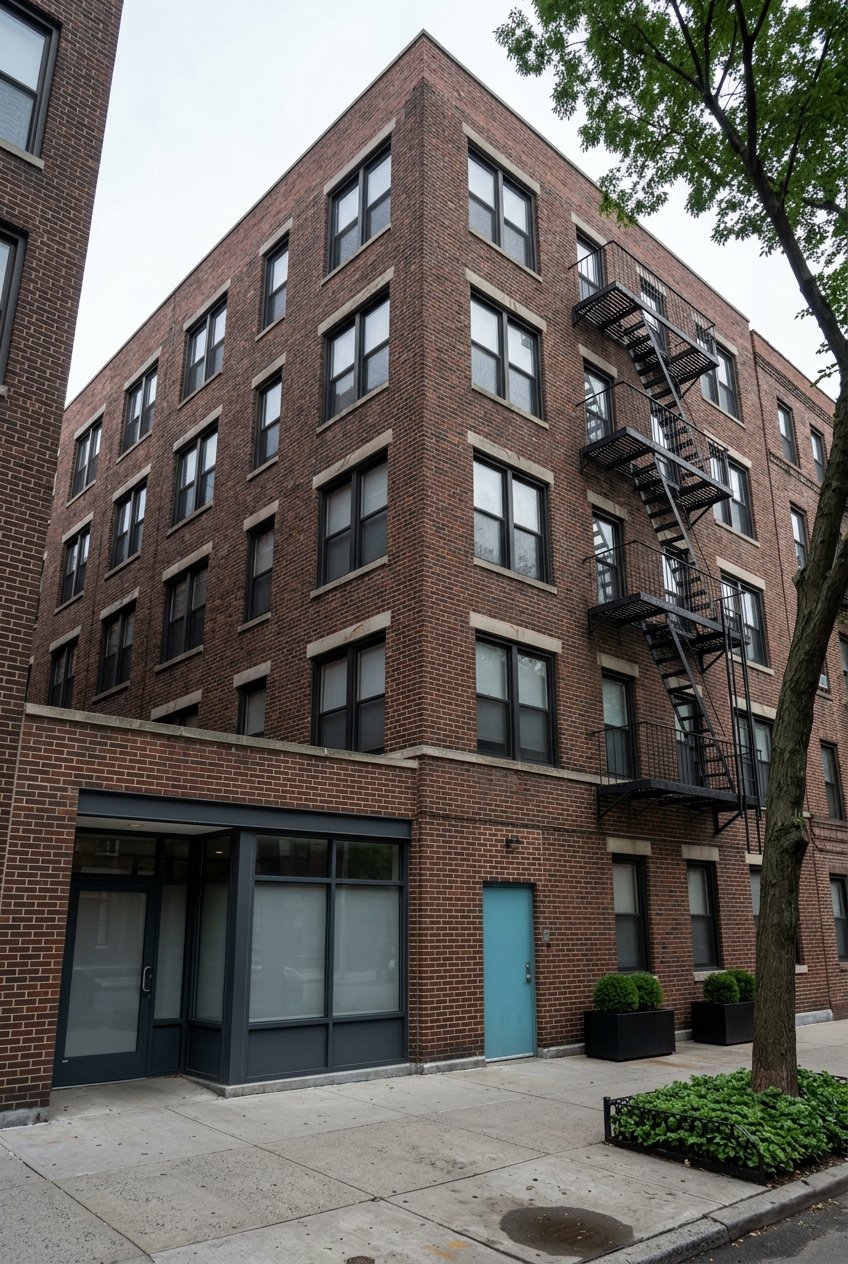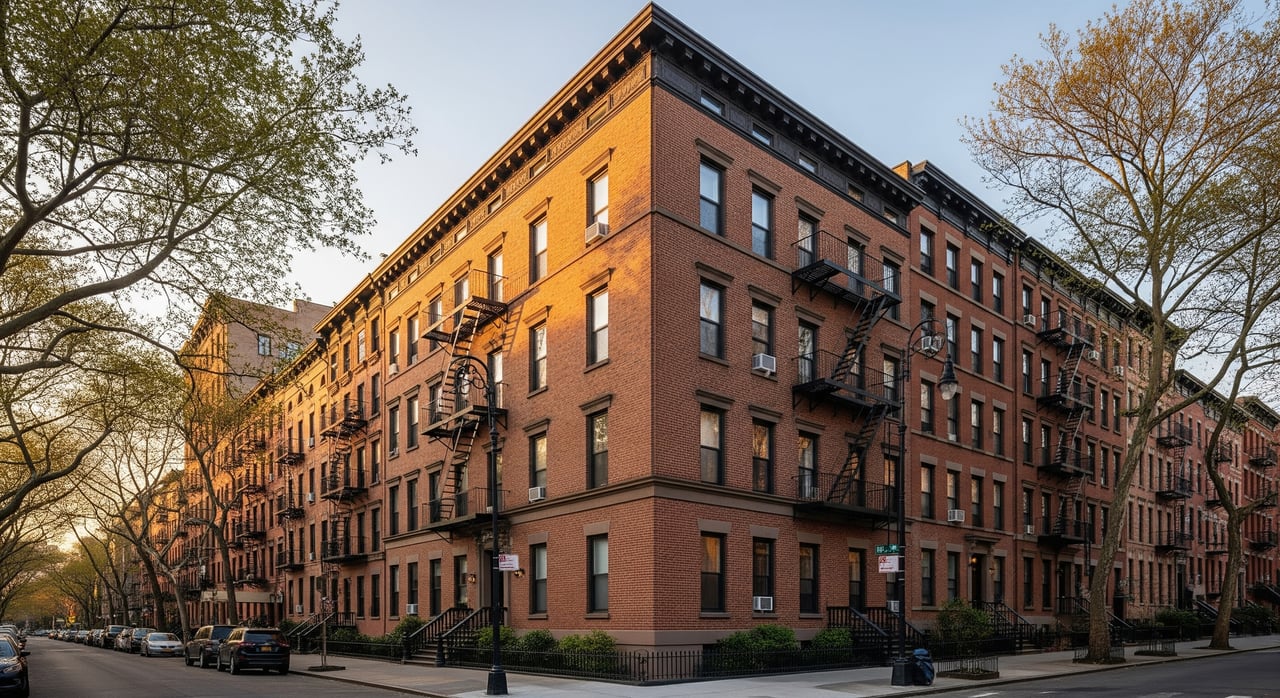
A 67-unit building in the Bronx sold for $3.965 million this spring. Do the math and that's about $59,000 a door for a property with one open HPD violation for every 30 units and no debt on it at all. The seller's broker, Marco Lala, put it plainly to The Real Deal: the late owner "did everything a landlord was supposed to do."
Around the same time, a 129-unit building in Inwood sold for $50.6 million. That's north of $390,000 a door, roughly seven times the per-unit price of the debt-free Bronx building, for a property serving a lower-income tenant base under a federal subsidy contract.
If you're pricing or evaluating a rent-stabilized portfolio the size of the 349-unit book currently listed at $17 million, that gap is the most important number in this article. It isn't about condition. It's about what's actually generating the income.
The Instinct That's Wrong
The natural assumption is that a well-run building sells for more than a distressed one. Fewer violations, no debt, a clean rent roll: that should command a premium.
It doesn't, not in New York's rent-stabilized segment in 2026.
The Bronx building that sold for $59,000 a unit wasn't distressed by any operational measure. Across the seller's roughly 984-unit portfolio, there were 32 open violations total, about one for every 30 units, well under the threshold brokers use to flag a building as troubled. The portfolio carried no debt. Property taxes had been paid on time for years. And it still traded near the bottom of the market.
Compare that to buildings with a regulatory agreement or a federal subsidy attached. Jonathan Rose Companies' purchase of 210 Sherman Avenue in Inwood was underpinned by the property's Project-Based Section 8 Mark-Up-to-Market status and a 420-c tax benefit, the kind of structure Ariel Property Advisors flagged as a template for institutional-grade affordable housing in the current market. Star Realty Corporation's $79.9 million purchase of the eight-building, 387-unit Prospect Park South Portfolio from Camber Property Group and Belveron Partners priced out to roughly $206,000 a unit, more than three times the Bronx sale, despite serving a similarly income-constrained tenant population.
The difference isn't upkeep. It's contract.
What Actually Sets The Price
Buildings with a regulatory agreement, whether that's Section 8, tax abatement, or a preservation lender's covenant, carry a floor under their rental income that ordinary rent-stabilized buildings don't have. A stabilized unit's legal rent can sit below operating costs indefinitely, and the Rent Guidelines Board's own 2026 Income and Expense Study found 9.2 percent of buildings with at least one stabilized unit already running negative net operating income. A subsidized unit doesn't carry that same open-ended exposure, and buyers price the difference accordingly.
That's why Ariel's second-quarter 2026 review noted that buildings with regulatory agreements accounted for 17 percent of the quarter's multifamily dollar volume on just 7 percent of transactions. Fewer deals, disproportionately more money, because contracted income supports a materially higher price per door.
Here's how that plays out across four real 2026 transactions, next to the citywide and Bronx averages for ordinary rent-stabilized product:
| Transaction | Units | Price | Price Per Unit | Income Structure |
|---|---|---|---|---|
| Pinnacle Group portfolio → Summit Properties (Chapter 11 sale) | 5,100 | $451.3M | ~$88,500 | Rent-stabilized, no subsidy, forced sale |
| Jonathan Rose Cos., 210 Sherman Ave, Inwood | 129 | $50.6M | ~$392,000 | Section 8 Mark-Up-to-Market, tax abatement |
| Star Realty Corp, Prospect Park South Portfolio | 387 | $79.9M | ~$206,000 | Affordable, regulatory agreement |
| Alkoff estate, 1181 Sheridan Ave, Bronx | 67 | $3.965M | ~$59,000 | Rent-stabilized, no subsidy, near-zero violations, debt-free |
| Citywide rent-stabilized average, Q1 2026 | — | — | $139,332 | Blended, all conditions |
| Bronx rent-stabilized average, Q2 2026 | — | — | ~$69,000 (59% below pre-HSTPA) | Blended, most distressed borough |
Even Pinnacle's forced Chapter 11 sale, arguably the worst-case scenario for a seller, cleared at nearly $88,500 a unit. That's still 50 percent above what an immaculate, debt-free Bronx portfolio fetched on the open market. Bankruptcy court plus a mixed national portfolio still outpriced clean local ownership, because the market wasn't discounting for distress. It was discounting for the absence of any income mechanism beyond capped stabilized rents.
Where A 349-Unit, $17 Million Portfolio Lands
Run the same math on the portfolio in question: $17 million divided by 349 units comes to roughly $48,700 a door.
That's below the Bronx average of $69,000 a unit, which Ariel's own reporting already flags as the most distressed pricing tier in the city and 59 percent below pre-HSTPA levels. It's below the $59,000-a-unit price the violation-free, debt-free Alkoff portfolio commanded. And it's a fraction of the $139,332 citywide stabilized average.
That doesn't automatically mean the portfolio is in worse physical shape than Alkoff's buildings. What it does mean, based on how this market has actually priced comparable deals in 2026, is that buyers are almost certainly assuming no contracted income floor, no tax abatement, no regulatory agreement doing any of the work. At this per-unit level, the pricing matches what our earlier research on portfolio segmentation described as the highest-risk cluster: older, heavily stabilized buildings with legal rents below $1,500, the profile that "theoretically" carries the highest cap rate because it carries the least certainty.
If the portfolio also carries any deferred maintenance or open violations on top of that, the discount compounds. Getting a stabilized unit up to code isn't cheap. Jose Tur, who owns two stabilized buildings in Washington Heights, told Commercial Observer that units needing real work run "$30,000 minimum" just for baseline habitability, before cosmetic fixes.
The Practical Filter
Before this portfolio, or one like it, goes to market, three questions determine which buyer tier will actually show up:
- Is there any regulatory agreement, Section 8 contract, or tax abatement attached to any building in the book? If yes, that subset should be marketed and possibly priced separately from the rest, the way institutional preservation buyers like Jonathan Rose or Metropolitan Realty Group underwrite.
- What's the violation count per unit, and is it closer to Alkoff's one-per-30 or the ten-plus-per-unit threshold that defines genuine distress? This tells you whether you're competing for patient local capital or bankruptcy-court buyers.
- Is the portfolio debt-free, or does a buyer need to solve a cash-in refinancing problem on day one? With traditional stabilized lenders largely retreated from the market, that answer changes who can even close.
A seller who markets a $48,700-a-unit portfolio to the same buyer pool that paid $390,000 a unit for a Section 8 asset in Inwood will get silence. A seller who understands which tier their asset actually belongs in can find the smaller, more realistic pool of buyers willing to transact at that price and move quickly. That's the difference between a listing that sits and one that closes.
For a deeper look at how bundling decisions interact with this same buyer segmentation, our earlier breakdown of whether to break up or bundle a 349-unit portfolio and our piece on how large portfolios trade differently than single assets both cover ground that's directly relevant here.
Two Questions Worth Answering Before You List
Does the rent freeze change any of this math? The Rent Guidelines Board adopted a citywide rent freeze on one- and two-year lease renewals in a 7-1 vote, effective October 1, 2026. It doesn't change the underlying mechanism this article describes. It tightens it. Buildings without a contracted income floor lose one more lever to close the gap between rising expenses and legal rent. Our post on what the 2026 rent freeze changed for stabilized portfolio sellers walks through the seller-side implications in more depth.
Why did the Pinnacle sale skew the first-quarter numbers so much? Ariel Property Advisors noted that the rent-stabilized segment's apparent Q1 2026 dollar volume record was driven almost entirely by that single 5,100-unit Chapter 11 sale. Strip it out and volume looks materially lower and closer to typical quarterly averages, a reminder that headline totals in this segment often hide a single outlier trade rather than reflecting broad market strength.
If you're holding a portfolio in this size range and want a straight answer on which buyer tier it actually fits, that's the conversation worth having before you go to market, not after. Exodus Capital works with owners across the Tri-State region to figure out exactly that. Discuss your exit strategy with our team before you price the next listing.